
Easy Meal Prep for Busy Caregivers - Time-Saving Tips and Nourishing Recipes


Caregiving can make cooking feel like one more urgent task in a day already full of needs, medicines, appointments, laundry, and check-ins. When energy is low, the goal is not a perfect menu. The goal is food that is safe, nourishing, and realistic.
A good meal prep routine does not need a full Sunday in the kitchen or rows of matching containers. It can be as simple as cooking extra rice, washing vegetables after groceries arrive, or setting up one appliance before a bath routine. Small habits can take pressure off the busiest parts of the day.
This guide focuses on easy meal prep that fits real life. It covers simple planning, batch cooking, smart use of kitchen gadgets, and quick recipes for different dietary needs. Use what helps, skip what does not, and adjust portions to suit the person being cared for.
Start with a meal plan that reduces decisions
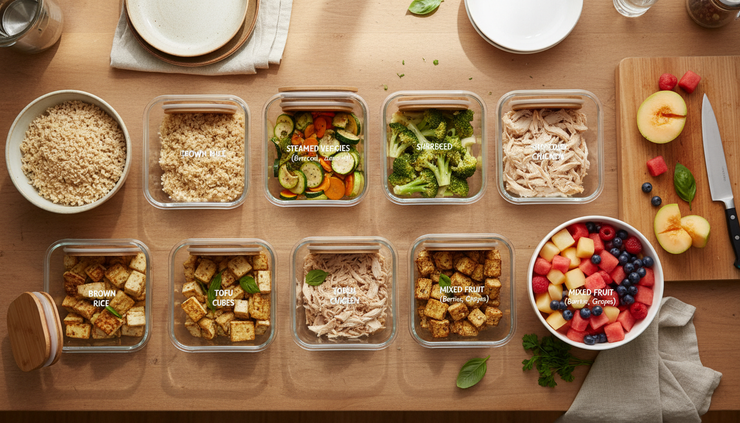
A meal plan should make the week lighter, not more complicated. For caregivers, the best plan is often a flexible one. Instead of assigning a full recipe to every meal, plan a few mix-and-match building blocks.
Think in parts:
One or two carbohydrates Rice, oats, noodles, potatoes, wholemeal wraps, or pasta.
Two proteins Eggs, chicken, fish, tofu, tempeh, beans, lentils, or yoghurt.
Three vegetables Choose a mix of fresh, frozen, and long-lasting options.
One easy flavour base Miso paste, low-sodium soy sauce, tomato sauce, ginger, garlic, curry paste, or lemon.
Two emergency meals Keep these for days when the schedule changes.
This style helps with efficient meal preparation because it gives options without requiring a new dish every day. Cooked rice can become porridge, fried rice, a rice bowl, or a side for soup. Boiled eggs can go into sandwiches, salads, noodles, or soft rice bowls.
Use a short planning rhythm
A weekly plan does not need to take long. Try a 10-minute check before grocery shopping.
Ask:
Which days are busiest?
Who needs soft, low-salt, high-protein, diabetic-friendly, vegetarian, or allergy-aware meals?
What is already in the fridge or freezer?
Which meals can be repeated without anyone getting bored?
What can be cooked once and used twice?
Plan around the hardest parts of the day. If mornings are rushed, prepare overnight oats, boiled eggs, or sliced fruit. If evenings are unpredictable, keep soup, cooked grains, and ready protein on hand.
Keep a small list of reliable meals
Caregivers often make hundreds of tiny decisions. A repeatable meal list removes some of that load. Keep it visible on the fridge or inside a kitchen cabinet.
Good “default meals” include:
Chicken or tofu porridge with spinach
Egg and vegetable fried rice
Lentil soup with wholemeal toast
Tuna or chickpea wraps
Salmon, rice, and steamed vegetables
Yoghurt bowls with oats and fruit
Soft scrambled eggs with avocado
Noodle soup with mushrooms and leafy greens
A balanced meal does not have to be elaborate. In home care and caregiving, a balanced meal often means a steady mix of protein, fibre-rich carbohydrates, healthy fats, and colourful produce, served in a way the person can comfortably eat.
Batch cook in small, useful amounts for easy meal prep
Batch cooking sounds big, but it can be gentle. You do not need to cook ten meals at once. For many homes, the sweet spot is preparing two or three basics that can be used in different ways.
Start with a one-hour prep block or even two 20-minute blocks. The key is to cook food that saves time later.
Good batch-cook items include:
Rice, quinoa, barley, or pasta
Roasted sweet potatoes or pumpkin
Hard-boiled eggs
Shredded chicken
Baked tofu or tempeh
Lentils or chickpeas
Washed salad greens
Chopped carrots, cucumber, capsicum, and celery
Soup stock or simple broth
Plain porridge base
Cook once, serve three ways
Repetition helps, but meals should still feel pleasant. A single batch of shredded chicken can become:
Rice porridge with ginger and spring onion
Wraps with cucumber, lettuce, and yoghurt dressing
Noodle soup with vegetables
Chicken salad with boiled eggs
Fried rice with peas and carrots
Baked tofu can become:
Tofu rice bowls with sesame and vegetables
Tofu noodle soup
Tofu scramble with turmeric
Lettuce cups with grated carrot
Mild curry with potatoes
This approach works well when appetites change. A person may want soup one day and a dry rice bowl the next. With prepared basics, changing the texture or flavour takes minutes.
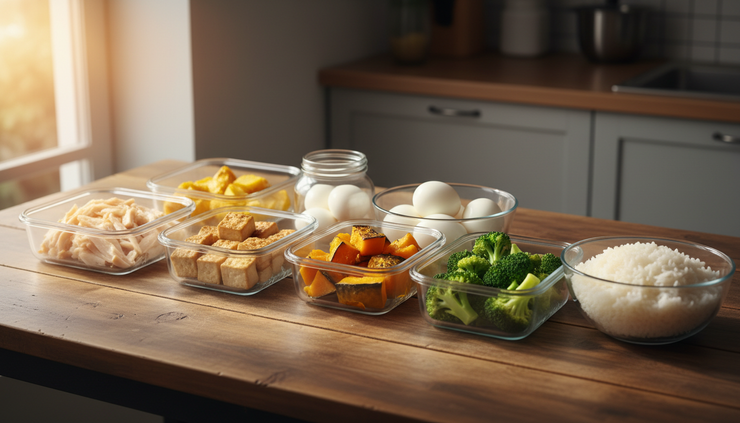
Store food safely and clearly
Meal prep only helps if food stays safe and easy to identify.
Use these simple habits:
Cool cooked food before storing it, but do not leave it out for too long.
Use shallow containers so food chills faster.
Label containers with the food name and date.
Keep raw and cooked foods separate.
Reheat cooked food until it is steaming hot.
Freeze portions that will not be eaten soon.
For softer diets, freeze soup, porridge, dhal, or mashed vegetables in smaller portions. This makes it easier to serve only what is needed.
If the person has swallowing difficulties, kidney disease, diabetes, food allergies, or another medical condition, follow advice from a qualified healthcare professional. The ideas here are general and should be adjusted to individual needs.
Use kitchen gadgets to save hands, time, and attention
Kitchen gadgets are most helpful when they reduce watching, stirring, or cleaning. A caregiver may need to pause cooking to answer a call bell, help with toileting, or prepare medication. Appliances that can handle steady cooking are useful for that reason.
Rice cooker
A rice cooker is not only for rice. It can prepare:
Plain rice or brown rice
Chicken porridge
Oats
Steamed fish on a tray
Steamed vegetables
One-pot rice with mushrooms, carrots, and tofu
Try cooking extra rice and freezing it in single-meal portions. Flatten the rice in freezer-safe bags or containers so it reheats quickly.
Slow cooker or multi-cooker
A slow cooker can turn simple ingredients into soft meals with little effort. It is useful for soups, stews, beans, dhal, and shredded meats.
Easy combinations include:
Chicken, carrots, potatoes, onion, and low-salt stock
Lentils, tomatoes, pumpkin, and mild curry spices
Fish slices added near the end to a vegetable broth
Beans, corn, tomatoes, and capsicum for a vegetarian stew
A multi-cooker can also pressure cook beans, steam vegetables, or make porridge quickly. Choose the functions that match the way the household already eats.
Blender or hand blender
A blender helps when soft textures are needed. It can turn cooked vegetables into soup, fruit into smoothies, or beans into dips.
Useful blends include:
Pumpkin soup with lentils
Banana, yoghurt, and oats
White bean dip with lemon and olive oil
Spinach, egg, and soft tofu blended into a savoury custard base
Air fryer or oven
An air fryer or oven can cook without constant attention. Use it for fish, chicken, tofu, vegetables, and potatoes. Line trays with baking paper for faster clean-up.
One tray can hold:
Salmon or tofu
Sweet potato wedges
Broccoli or cauliflower
A light seasoning of olive oil, garlic, and herbs
Set a timer, then use the cooking time for another task nearby.
Quick nourishing recipes for different needs
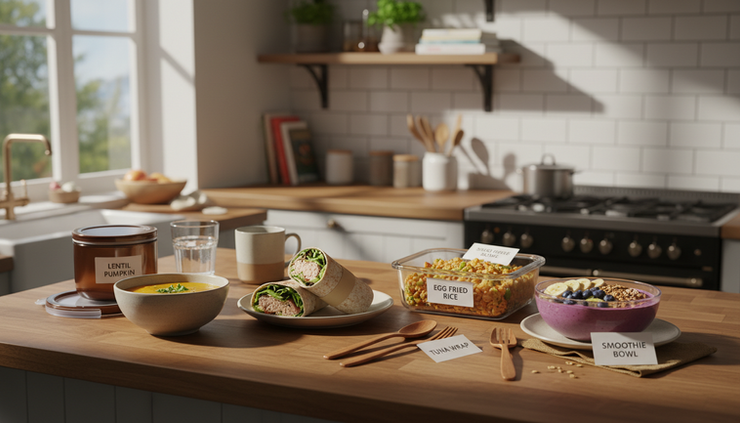
These recipes are flexible. Adjust salt, spice, portion size, and texture to suit personal needs. Use low-sodium options when needed, and check labels for allergens.
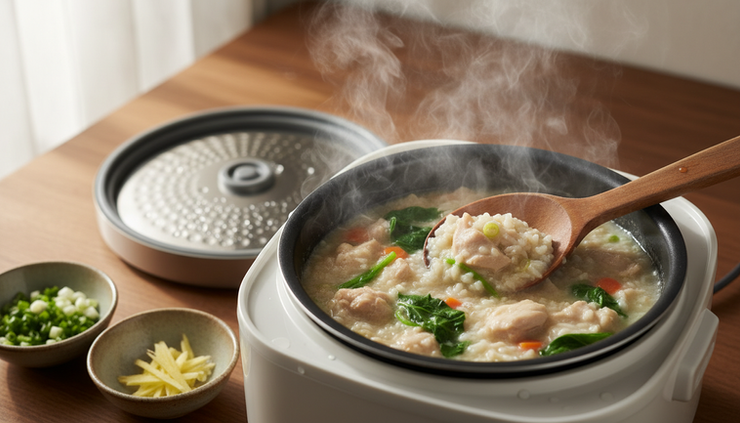
Soft ginger chicken porridge
This is gentle, comforting, and easy to reheat.
Ingredients
Cooked rice
Shredded chicken or soft tofu
Water or low-salt stock
Ginger slices
Spinach or chye sim, chopped finely
Spring onion, optional
Method
Simmer cooked rice with water or stock until soft. Add chicken or tofu and ginger. Stir in chopped greens near the end. Remove ginger slices before serving if preferred.
For a smoother texture, blend lightly or cook longer with extra liquid.
Tofu and vegetable rice bowl
This works for vegetarian meals and can be made low-salt.
Ingredients
Brown rice or white rice
Firm tofu, cubed
Carrot, cucumber, and steamed greens
Sesame oil
Low-sodium soy sauce or a small spoon of miso mixed with warm water
Method
Bake or pan-cook tofu until lightly golden. Serve over rice with vegetables. Add a little sesame oil and sauce. For extra protein, add edamame or a boiled egg if suitable.
Tuna or chickpea yoghurt wrap
A good no-cook option for busy days.
Ingredients
Wholemeal wraps
Canned tuna in water, drained, or mashed chickpeas
Plain yoghurt
Lemon juice
Cucumber and lettuce
Pepper or mild herbs
Method
Mix tuna or chickpeas with yoghurt and lemon. Add cucumber and lettuce, then roll in a wrap. Cut into smaller pieces for easier eating.
For dairy-free meals, use mashed avocado or a dairy-free yoghurt.
Lentil pumpkin soup
This soup is rich, soft, and freezer-friendly.
Ingredients
Red lentils
Pumpkin or sweet potato
Carrot
Onion, optional
Mild curry powder or turmeric
Low-salt stock or water
Method
Simmer everything until soft. Blend until smooth or leave slightly chunky. Add water to thin it if needed.
Serve with wholemeal toast, rice, or a spoon of yoghurt if suitable.
Egg fried rice with vegetables
This uses leftovers well and can be ready quickly.
Ingredients
Cooked rice
Eggs
Frozen peas and carrots
Chopped leafy greens
Garlic, optional
A small amount of low-sodium soy sauce
Method
Scramble eggs in a pan. Add vegetables and rice. Stir until hot throughout. Season lightly.
For a higher-fibre version, use brown rice. For a softer version, add a splash of water and cook a little longer.
Smoothie bowl for low-appetite days
When appetite is low, a small nutrient-dense bowl may feel easier than a full plate.
Ingredients
Banana or mango
Plain yoghurt or soy yoghurt
Oats
Nut butter or seed butter, if suitable
Soft fruit
Method
Blend yoghurt, fruit, and oats until smooth. Top with soft fruit. Keep toppings small and easy to chew.
For diabetes-friendly needs, use less sweet fruit, include protein, and follow medical nutrition advice.
Build a routine that can survive hard days
A meal prep routine should include backup plans. Caregiving days can change quickly, and food plans need room for that.
Keep a small “tired day” section in the kitchen. It might include:
Microwave rice or frozen cooked rice
Canned beans, tuna, sardines, or chickpeas
Frozen vegetables
Eggs
Instant oats
Low-salt soup cartons
Nut butter or seed butter
Wholemeal bread or wraps
Shelf-stable tofu
With those items, a meal can come together fast:
Rice, egg, and frozen vegetables
Toast with peanut butter and banana
Soup with added lentils or tofu
Sardines with rice and cucumber
Oats with yoghurt and fruit
Chickpea wrap with vegetables
Make clean-up part of the plan
Cooking is only half the work. Clean-up matters too.
Try these habits:
Rinse tools as soon as they are used.
Cook with one pot or one tray when possible.
Use the same chopping board for vegetables before raw meat.
Keep wipes or a small cloth nearby.
Line baking trays.
Soak pots during mealtime.
If another family member or helper asks how to assist, give a specific task. “Wash and chop the greens” or “Label these containers” is easier to act on than “help with food”.
A kinder way to think about meal prep
Meal prep is not a test of organisation. It is a support system. Some weeks will have labelled containers, cooked grains, and soup in the freezer. Other weeks will rely on eggs, toast, and frozen vegetables. Both can be enough.
Start with one change that removes stress. Cook double rice. Wash fruit after shopping. Make soup for the freezer. Set up the rice cooker before the day gets busy. Keep a list of five meals that always work.
Caregiving takes patience, time, and heart. The kitchen should not make that load heavier. With a few prepared basics, useful appliances, and flexible recipes, nourishing food can become easier to manage, one small step at a time.



Comments