
IDDSI Framework Explained - A Guide to Food and Drink Textures for Dysphagia


A meal can look comforting, smell familiar, and still be unsafe to swallow. For a person with dysphagia, the texture of food and the thickness of drinks can make the difference between eating with confidence and facing coughing, choking, fatigue, or aspiration risk.
The International Dysphagia Diet Standardisation Initiative, known as IDDSI, gives caregivers, clinicians, food service teams, and families a common way to describe modified food and drink textures. Instead of vague terms like “soft diet” or “thickened drink”, it uses clear levels, simple tests, and shared language.
This guide explains how the levels work, what each texture looks like in daily care, and why getting it right supports both health and quality of life.
This article is for general information only. Dysphagia management should always follow guidance from a speech and language therapist, doctor, dietitian, or other qualified healthcare professional.
Why texture matters for dysphagia
Swallowing is a fast and complex process. The lips, tongue, jaw, throat muscles, airway, and oesophagus need to work together in the right sequence. Dysphagia can affect any part of that process.
When food or drink is too thin, too dry, too sticky, too crumbly, or too mixed in texture, it can be harder to control in the mouth. It may move too quickly, leave residue, or enter the airway. That can increase the risk of coughing, choking, chest infections, dehydration, poor nutrition, and fear around meals.
For dysphagia and other swallowing difficulties, food textures and drink thickness affect safety, comfort, and dignity at every meal.
Texture modification helps by changing how food and drinks behave. The aim is not only to “make food softer”. A safe texture should match the person’s swallowing ability. It should also be nourishing, visually acceptable, and enjoyable enough that the person still wants to eat and drink.

Good practice often involves:
Assessing swallowing ability before changing textures
Matching meals and drinks to the recommended IDDSI level
Preparing the same texture consistently each time
Checking food before serving, especially after reheating
Watching for fatigue, coughing, wet voice, or distress during meals
Reviewing the plan when health status changes
The IDDSI framework supports this process with a shared scale from Level 0 to Level 7.
The IDDSI Framework levels explained
IDDSI levels cover drinks, foods, and textures that sit between the two. Drinks are mainly described from Level 0 to Level 4. Foods are mainly described from Level 3 to Level 7.
The key idea is simple: lower levels flow more easily, while higher food levels require more chewing and oral control.
IDDSI level | Name | Main characteristics | Practical examples |
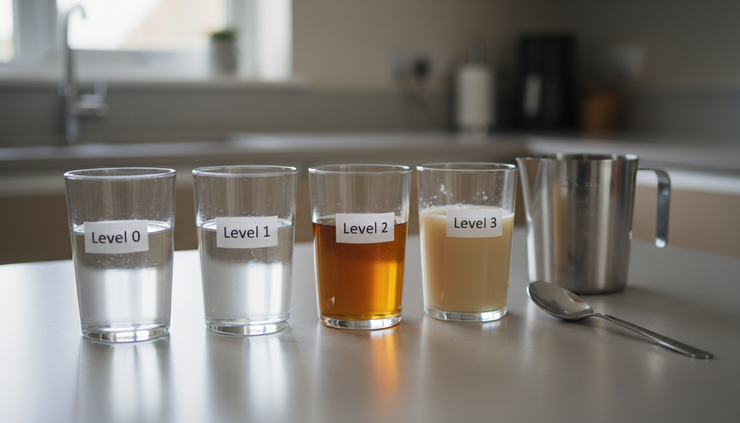
Level 0 | Thin | Flows like water. Moves quickly through a straw, cup, or syringe. Requires good control and a timely swallow. | Water, clear soup, kopi or tea without thickener, juice, milk, oral nutrition supplements if not thickened |
Level 1 | Slightly thick | Thicker than water but still flows easily. Often used when thin drinks move too fast but thicker fluids are not needed. | Slightly thickened water, slightly thickened milk, some naturally thicker fruit nectars if tested and suitable |
Level 2 | Mildly thick | Flows from a cup but more slowly than thin drinks. Usually sippable. May require some effort through a straw. | Mildly thickened tea, coffee, cordial, milk drinks, nutritional drinks prepared with prescribed thickener |
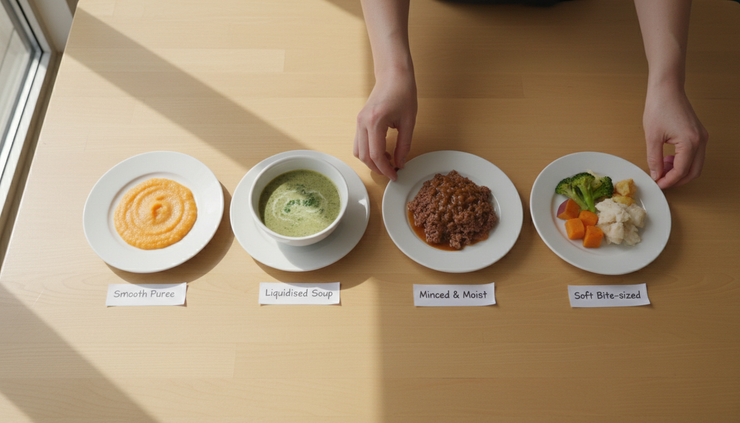
Level 3 | Liquidised or moderately thick | Can be drunk from a cup or eaten with a spoon. Flows slowly and does not need chewing. For foods, texture is smooth and moist. | Smooth blended porridge, strained cream soup, smooth yoghurt drinks, blended dhal without lumps, moderately thickened drinks |
Level 4 | Pureed or extremely thick | Usually eaten with a spoon. Holds shape on a spoon and does not flow easily. Smooth, cohesive, and lump-free. No chewing needed. | Smooth pureed chicken, pureed fish, mashed pumpkin passed through a sieve, thick smooth congee, smooth bean puree, thick custard |
Level 5 | Minced and moist | Soft, moist food with very small, even pieces. Minimal chewing is needed. Lumps must be easy to squash with the tongue. | Finely minced chicken in thick gravy, moist minced tofu, minced fish with sauce, very soft minced vegetables, finely mashed rice with sauce |
Level 6 | Soft and bite-sized | Soft, tender pieces that can be chewed and mashed. Bite-sized pieces help reduce choking risk. No hard, tough, dry, or stringy foods. | Soft fish flakes, tender stew meat cut small, soft omelette pieces, ripe banana pieces, well-cooked carrot cubes, soft rice with moist sauce |
Level 7 | Regular and easy to chew | Regular foods include normal everyday textures. Easy to chew foods are softer choices within Level 7 for people who can chew but need less effort. | Regular rice, noodles, bread, meat, fruit, and vegetables if suitable. Easy to chew options include soft steamed fish, moist pasta, ripe papaya, soft tofu, soft pancakes |
IDDSI also describes transitional foods. These start as one texture but change when moisture or heat is added, or when pressure is applied. Examples may include certain wafers or meltable snacks. They are only suitable when recommended, as they still need careful testing and supervision.
How each IDDSI level works in real meals and drinks
Knowing the level name is useful. Seeing how it works on a plate is even better. These examples show how texture changes apply to common foods and drinks in daily care.
Level 0 thin drinks
Level 0 drinks flow quickly. They are suitable only when the person can manage thin fluids safely.
Common examples include:
Plain water
Tea or coffee without thickener
Clear broth
Fresh milk
Thin juices
Thin liquids can be challenging because they move fast. A person may look fine with soft food but cough on water. That is why drink recommendations should never be guessed.
Levels 1 to 3 thickened drinks
Thickened drinks move more slowly. This can give some people more time to control the liquid and start a swallow safely.
A prescribed thickener should be mixed exactly as directed. Thickness can change depending on:
The type of drink
The temperature
Standing time after mixing
Stirring method
Ice melting into the drink
Saliva mixing with the fluid
A thickened kopi, teh, Milo, juice, or nutritional supplement should be tested after preparation, not judged by appearance alone. Some drinks thicken over time, while others may thin out.
Level 3 liquidised foods
Level 3 foods are smooth and pour slowly. They do not need chewing. They are often served from a spoon, but they should not be so firm that they behave like puree.
Suitable examples include:
Smooth blended congee
Thick strained soup
Smooth blended lentils
Smooth yoghurt without fruit pieces
Blended oats with no lumps
Avoid seeds, skins, fibrous strands, rice grains, and small lumps unless they have been fully blended and tested.
Level 4 pureed foods
Level 4 foods are thicker than Level 3. They should be smooth, moist, and cohesive. They should hold together on the spoon and not separate into liquid and solids.
Suitable examples include:
Pureed fish with smooth sauce
Pureed chicken with gravy
Pureed potato with milk or stock
Smooth pureed vegetables
Thick smooth custard
Pureed food should not be sticky like peanut butter, rubbery, dry, or crumbly. Adding suitable sauce, gravy, stock, or milk can improve moisture and flavour.
Level 5 minced and moist foods
Level 5 allows more texture but still limits chewing demand. Food pieces must be very small and soft. The meal should stay moist and hold together, rather than scattering in the mouth.
Suitable examples include:
Finely minced meat in thick sauce
Moist minced fish
Soft scrambled egg broken into small pieces
Minced tofu with thick gravy
Very soft vegetables finely chopped and mixed with sauce
Dry minced meat is a common problem. Sauce is not optional here. It helps the food stay together and reduces loose particles.
Level 6 soft and bite-sized foods
Level 6 foods require chewing, but the pieces are soft and easy to manage. They should be cut to the recommended size for the person’s age and care plan.
Suitable examples include:
Tender fish cut into small pieces
Soft tofu cubes
Well-cooked vegetables
Soft ripe fruit without skin or seeds
Tender chicken stew cut small
Moist noodles cut shorter if needed
Avoid tough meat, crispy edges, hard crusts, fibrous vegetables, chewy skins, and mixed textures such as thin soup with hard chunks.
Level 7 regular and easy to chew foods
Level 7 includes normal everyday foods for people who can safely chew and swallow regular textures. The easy to chew category supports people who can manage regular food but need softer choices.
Suitable easy to chew examples include:
Soft steamed fish
Omelette
Soft pasta with sauce
Ripe banana or papaya
Soft cooked rice with moist dishes
Tender braised tofu
Regular foods still need thought. A person may manage rice and fish well but struggle with dry crackers, nuts, raw carrot, or tough meat.
Practical ways to implement IDDSI Framework safely
Texture modification works best when everyone uses the same language and checks the same details. In care homes, hospitals, day care settings, and family homes, small differences in preparation can lead to big differences in safety.
Use the recommended testing methods
IDDSI includes practical tests such as flow, fork drip, spoon tilt, and fork pressure tests. These help confirm whether food or drink matches the intended level.
For example, a drink may look mildly thick but test as moderately thick. Puree may seem smooth but fail if it separates into liquid and solids. A soft food may look tender but fail if it cannot be easily mashed with a fork.
Use the official IDDSI testing guidance and local clinical procedures. Visual judgement alone is not reliable.
Keep recipes consistent
A safe texture should be repeatable. Write down:
Exact ingredients
Amount of liquid added
Thickener type and quantity
Blending time
Standing time
Serving temperature
Reheating instructions
This is especially useful when several people prepare meals. A helper on the morning shift and a family member at dinner should be able to produce the same safe texture.
Watch for high-risk textures
Some foods are difficult for many people with dysphagia because they scatter, stick, crumble, or combine thin liquid with solids.
Use extra caution with:
Mixed soups with thin broth and chunks
Dry rice without sauce
Crumbly biscuits
Nuts and seeds
Sticky glutinous foods
Tough meat
Raw vegetables
Fruit with skins, membranes, or pips
Bread that forms a sticky ball in the mouth
These foods may still be possible in modified form, but they need careful adjustment and professional guidance.
Serve meals with dignity
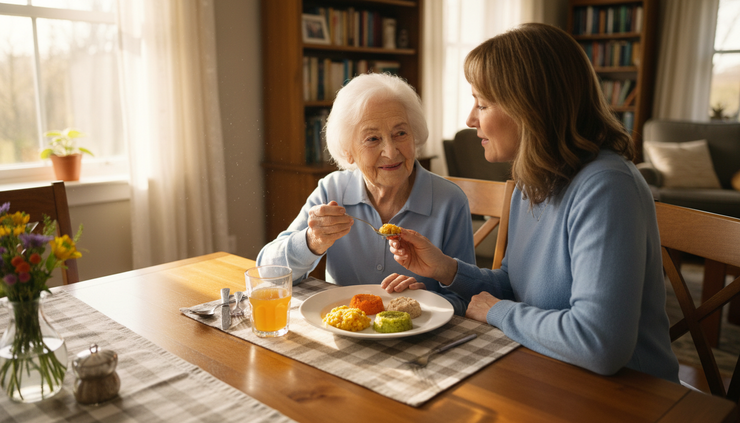
Texture-modified food should still look and taste like food. Where possible, keep flavours separate instead of blending everything into one colour. Shape purees neatly, serve sauces attractively, and check the temperature before serving.
A person is more likely to eat enough when the meal looks familiar, smells good, and respects personal preferences.
How proper texture modification supports health and quality of life
The goal of an IDDSI plan is not restriction for its own sake. The goal is safer, more comfortable eating and drinking.
When food and drinks match a person’s swallowing ability, several benefits can follow.
Reduced risk during meals
The right texture can help lower the risk of choking, coughing, and food or fluid entering the airway. It can also reduce anxiety for caregivers who worry at every sip or mouthful.
Better hydration and nutrition
People with dysphagia may eat or drink less because meals feel tiring or frightening. Safer textures can make intake easier. This supports energy, wound healing, muscle strength, and overall health.
Thickened drinks need special attention. Some people drink less when fluids are thickened because the taste and mouthfeel change. Offering preferred flavours, serving drinks at suitable temperatures, and monitoring intake can help.
Less fatigue at mealtimes
Chewing and swallowing can be tiring. A texture that matches ability can reduce effort and help the person finish more of the meal before becoming exhausted.
More confidence and social connection
Eating is social and emotional. Safe, appealing texture-modified meals can help people join family meals, enjoy familiar dishes, and feel less singled out.
Clearer teamwork
When everyone uses IDDSI language, communication improves. A speech and language therapist can recommend Level 5 minced and moist. A dietitian can plan nutrition around it. Kitchen staff can prepare it. Caregivers can check it. Family members can understand what to serve at home.
A supportive approach to safer eating
The IDDSI levels give structure, but the person remains at the centre of care. A safe plan should reflect swallowing ability, nutrition needs, culture, food preferences, routines, and comfort.
For caregivers and healthcare teams, the most useful next step is to make texture recommendations practical. Confirm the prescribed level. Learn the testing method. Standardise recipes. Watch how the person responds. Ask for review when swallowing changes, appetite drops, coughing increases, or meals become stressful.
Texture-modified food and drinks can feel overwhelming at first, especially when a family is adjusting after a hospital stay or new diagnosis. With clear guidance and careful preparation, meals can become safer, calmer, and more enjoyable again.



Comments