
Feeding Aids for Dysphagia: Safe Swallowing Tools That Support Independence


A meal should feel nourishing, not frightening. For someone living with dysphagia, even a sip of water or a spoonful of rice porridge can bring coughing, fatigue, or anxiety. The right feeding aids can make a real difference, not by replacing care, but by making each bite safer, calmer, and more manageable.
Dysphagia means difficulty swallowing. It can happen after stroke, with Parkinson’s disease, dementia, head and neck cancer, frailty, reflux, or other medical conditions. Some people struggle with thin liquids. Others tire halfway through a meal, pocket food in the cheeks, or need reminders to chew and swallow.
This guide looks at practical tools and techniques that support swallowing safety and eating independence. It is informational only and should not replace advice from a doctor, speech and language therapist, dietitian, occupational therapist, or nurse.

Why feeding aids matter for dysphagia
Dysphagia affects more than the act of swallowing. It can change appetite, confidence, nutrition, hydration, and social life. A person who coughs during meals may begin eating less. Someone who spills drinks may avoid drinking enough. A caregiver may feel unsure about how much help is safe without taking away independence.
Feeding aids help in three main ways:
They control speed, so food and fluid enter the mouth at a safer pace.
They improve positioning, so the body is better aligned for swallowing.
They reduce effort, so the person can focus on chewing and swallowing.
When families search for feedings aids for dysphagia, they often expect one perfect tool. In reality, the best support is usually a small set of aids matched to the person’s swallow, posture, hand function, cognition, and food preferences.
A person recovering from stroke may need a non-slip mat, angled spoon, and controlled-flow cup. Someone with tremor may benefit from heavier cutlery and a bowl with a raised edge. A person with dementia may need high-contrast plates, verbal prompts, and a quiet dining space.
Speech and language therapists often describe dysphagia care as a balance between safety, nutrition, dignity, and enjoyment. The safest plan is one the person can actually follow at every meal.
Tools that can make swallowing safer
Feeding aids should match the swallowing plan given by healthcare professionals. A cup or spoon that helps one person may be unsafe for another, especially if liquid thickness, alertness, or head posture are involved.
Cups that control flow
For many people with dysphagia, thin liquids move too quickly. Adaptive cups can slow the flow and reduce the need to tilt the head back.
Common options include:
Feeding aid | How it helps | Practical example |
Controlled-flow cup | Releases small amounts of liquid at a time | Helpful for someone who gulps water too quickly |
Nosey cup | Has a cut-out for the nose, reducing the need to tip the head back | Useful when neck extension triggers coughing |
Straw with one-way valve | Keeps liquid near the top of the straw | May reduce effort for someone with weak suction |
Spouted cup | Directs liquid into the mouth | Can help with lip closure, but may not suit everyone |
A nosey cup can be especially useful when a person needs to keep the chin slightly down while drinking. Tilting the head back can open the airway and increase risk for some people, so cup design matters.
Still, cups are not automatically safe. Some people should avoid straws because they can deliver liquid too fast. Others manage better with a straw because it gives them control. This is why assessment is so important.
Spoons that support smaller, safer bites
Large spoonfuls increase the workload of chewing and swallowing. Smaller spoons encourage smaller bites and slower pacing.
Helpful choices include:
Teaspoons instead of tablespoons
Shallow spoons to avoid overloading the mouth
Angled spoons for people with limited wrist or arm movement
Soft-tipped spoons for sensitive gums or poor lip closure
A caregiver supporting someone with dysphagia can place only a small amount on the spoon, wait for the swallow, then check that the mouth is clear before offering the next bite.
Plates and bowls that reduce effort
People with one-sided weakness, tremor, low vision, or poor coordination may struggle to scoop food. This can lead to frustration and fatigue before the meal is finished.
Useful aids include:
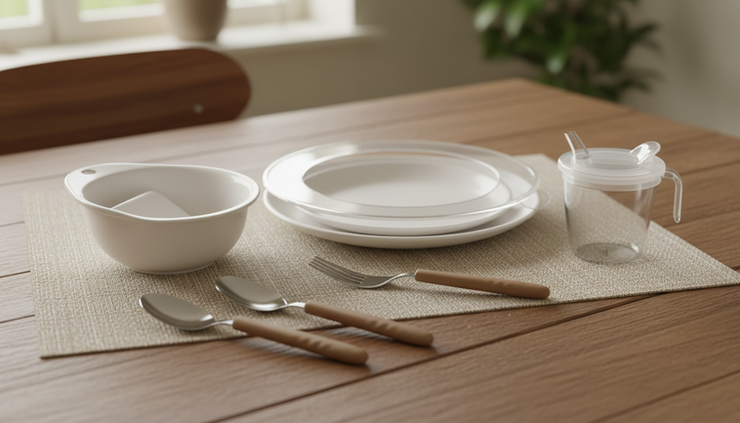
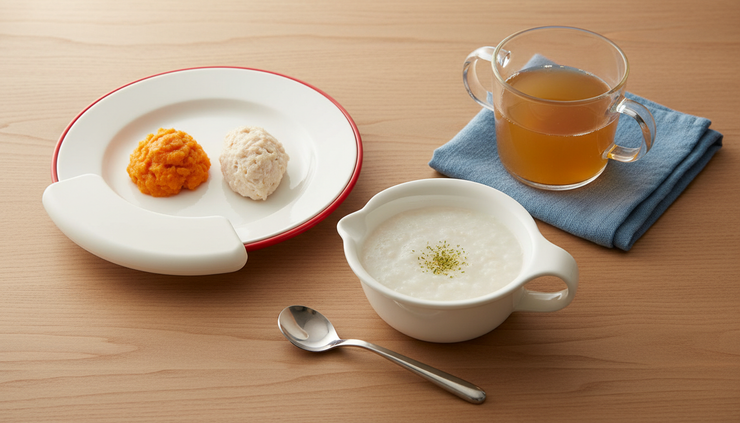
Scoop bowls with a raised side
Plate guards that clip onto regular plates
Non-slip mats under bowls and cups
High-contrast plates, such as a blue plate for pale foods like porridge or mashed potato
These aids do not directly change the swallow, but they support safer eating by reducing distraction and effort. When the person can load the spoon more easily, they can eat more slowly and with better control.
Techniques that work alongside feeding aids
Tools help most when they are part of a clear mealtime routine. Dysphagia care often includes posture, pacing, texture changes, and supervision.
Position the body before the first bite
Good posture gives the swallow a better starting point. A common setup includes:
Sitting upright at about 90 degrees
Feet supported on the floor or footrests
Head and neck comfortable, not tilted far back
Shoulders relaxed and level
Staying upright after meals, if recommended
For someone eating in bed, extra care is needed. Raising the bed alone may not be enough if the person slides down or the head bends awkwardly. Pillows, bed positioning, and seating support should be reviewed by a healthcare professional.
Use texture and thickness safely
A feeding aid cannot fix the wrong food texture. Some people need soft and bite-sized meals. Others need minced and moist food, purees, or thickened drinks. The International Dysphagia Diet Standardisation Initiative, known as IDDSI, provides common terms and testing methods used in many care settings.
Texture changes should be guided by a speech and language therapist and dietitian. A diet that is too thin may increase risk. A diet that is too thick or restrictive may reduce fluid and food intake.
Local meals can often be adapted. Rice porridge may need a consistent texture without watery separation. Noodles may need to be cut shorter or avoided if they are hard to control. Soups may need thickening, especially if they contain mixed textures like thin broth with floating ingredients.
Slow the pace of the meal
Rushing is a common trigger for coughing or choking. Pacing techniques include:
Offer one small bite at a time.
Wait for the swallow before the next spoonful.
Watch for breathing changes, wet voice, or throat clearing.
Allow rest breaks.
Keep conversation gentle and avoid asking questions mid-mouthful.
For people who eat independently, visual cues may help. A small sign on the table saying “small sips” or “swallow twice” can be useful when recommended by a therapist.
Reduce distractions
Swallowing takes concentration. A loud television, crowded table, or fast-moving conversation can make meals harder.
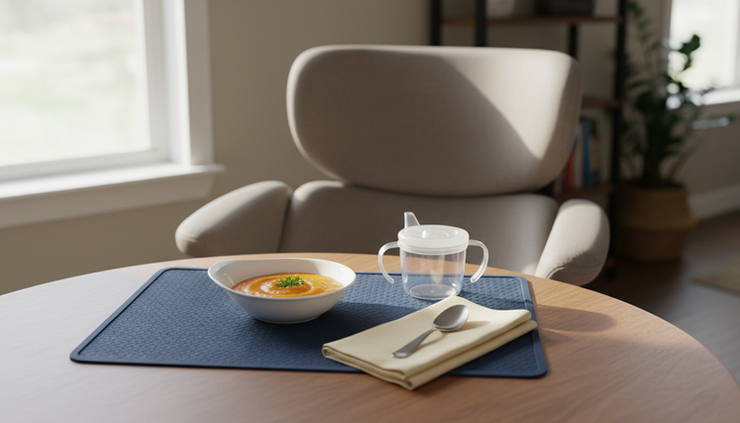
A calmer setting may include a familiar chair, good lighting, minimal background noise, and the same cup or spoon at each meal. Routine supports confidence, especially for people with memory changes.
How feeding aids support eating independence
Eating independence does not always mean eating without any help. It can mean holding the cup, choosing the next bite, scooping part of the meal, or finishing a drink with fewer prompts.
For many people, these small gains matter deeply.
A person with tremor may feel more confident using a weighted spoon. Someone with weak grip may eat more comfortably with a built-up handle. A person with one-sided weakness may use a plate guard and non-slip mat to scoop food without chasing it around the plate.
The right setup can also reduce caregiver stress. Instead of correcting every movement, the caregiver can focus on observation, encouragement, and safety.
People with swallowing difficulties, swallowing safety, eating independence, and specialised utensils often get discussed separately, but they are closely linked. When the utensil fits the person, the meal becomes less about restriction and more about participation.
Composite experiences from real care situations
The following examples are anonymised composites based on common experiences shared in dysphagia care. They are not medical recommendations.
“After my stroke, I hated needing help for every sip. The cup with the nose cut-out helped me drink without leaning my head back. I still needed reminders to slow down, but I felt more in control.”
“Mum used to give up halfway through lunch. The scoop bowl and non-slip mat made it easier for her to feed herself. She ate more because she was not getting tired from chasing the food.”
“We thought a straw would help Dad, but the therapist advised against it for his swallow pattern. Switching to a controlled-flow cup and thicker drinks made meals calmer.”
These stories highlight a key point. Independence improves when aids match the person, not when tools are chosen by guesswork.
Choosing the right feeding aid with professional guidance
Buying feeding aids without assessment can be risky. Dysphagia has different causes, and signs are not always obvious. Some people silently aspirate, which means food or fluid enters the airway without strong coughing.
Seek professional advice if meals involve:
Coughing or choking during eating or drinking
A wet or gurgly voice after swallowing
Food left in the mouth after meals
Repeated chest infections
Unplanned weight loss
Avoiding food or drink
Long, tiring meals
Drooling or poor lip closure
Trouble swallowing tablets
A care team may include several professionals.
Doctor
Checks for medical causes, medication issues, infections, reflux, and overall health risks.
Speech and language therapist
Assesses swallowing and recommends safe textures, liquid thickness, strategies, and suitable feeding methods.
Dietitian
Helps maintain nutrition and hydration when food choices become limited.
Occupational therapist
Recommends seating, positioning, adapted cutlery, plates, cups, and ways to support independence.
Dentist or oral health professional
Assesses teeth, dentures, pain, dry mouth, and oral hygiene, all of which affect eating.
In Singapore, dysphagia support may be available through hospitals, rehabilitation centres, community care providers, and home therapy services. For those caring for an older family member at home, asking for a swallow review before buying multiple products can save time, money, and stress.
Practical setup for a safer meal
A useful dysphagia mealtime setup is simple and repeatable. The aim is not to turn the dining table into a clinic. The aim is to make safe choices easier.
Before the meal:
Check alertness. A very sleepy person may not be safe to feed.
Seat the person upright with good support.
Prepare the recommended food texture and drink thickness.
Place utensils, napkins, and suction or emergency items if prescribed.
Reduce background noise.
During the meal:
Offer small bites and sips.
Keep the pace slow.
Watch for coughing, watery eyes, voice changes, or distress.
Encourage extra swallows if recommended.
Stop if the person becomes too tired or unsafe.
After the meal:
Check the mouth for leftover food if advised.
Support oral care.
Keep the person upright for the recommended time.
Record concerns, such as coughing with a specific food.
Good records help professionals adjust the plan. A short note such as “coughed with thin tea but not with thickened milo” can be more useful than a general comment like “lunch was difficult”.
A safer meal is a shared plan
Feeding aids for dysphagia can protect dignity as much as safety. A controlled-flow cup may help someone drink without fear. A scoop bowl may make lunch less tiring. A small spoon may slow the meal just enough for each swallow to feel manageable.
The best results come from matching the aid to the person. Swallowing ability, posture, hand control, alertness, food texture, cultural food preferences, and home routines all matter. What works in hospital may need adjusting at home. What works during breakfast may not work when the person is tired at dinner.
If dysphagia is part of daily life, start with professional guidance, then build a simple toolkit around the person’s real meals. The goal is safe swallowing, steady nutrition, and as much eating independence as possible, one calm bite at a time.



Comments