
Healthy Snacks for Seniors with Small Appetites - Nutritious Ideas for Better Energy

A snack can do more than fill a gap before dinner. For many seniors, it can steady energy, add valuable nutrients, and make eating feel easier when a full plate looks overwhelming.
Healthy snacking is especially helpful for older adults who eat small portions, feel full quickly, have changing taste buds, or tire easily during meals. A few well-chosen bites can support strength, mood, hydration, digestion, and daily routines.
The best snacks are simple, familiar, and easy to prepare. They do not need to be fancy. A small bowl of yoghurt with fruit, a slice of wholemeal toast with egg, or soft steamed sweet potato can be more useful than a large meal that goes unfinished.
This guide shares practical ideas, gentle recipes, portion tips, and ways to add more fruits and vegetables to daily eating. It is general information only and should not replace advice from a doctor, dietitian, speech therapist, or care team, especially for seniors with diabetes, kidney disease, swallowing issues, food allergies, or special medical diets.
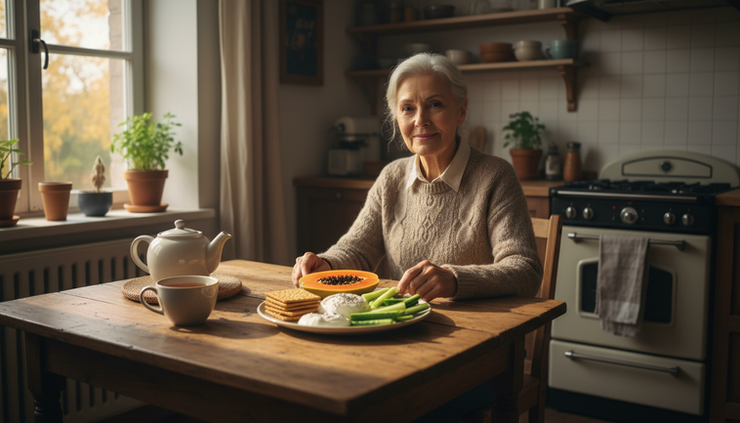
Why smart, healthy snacks help energy and overall health in seniors
As people age, appetite often changes. Some seniors feel hungry less often. Others may avoid food because chewing is tiring, digestion feels slower, or food tastes different. Illness, medication, low mood, dental issues, and reduced activity can also affect eating.
That is where healthy snacks for seniors can help. Instead of relying on three large meals, smaller snacks spread through the day can make nutrition more manageable.
Good snacks can help to:
Maintain energy
A snack with carbohydrate and protein can help prevent long dips between meals.
Support muscle health
Protein-rich options such as eggs, tofu, yoghurt, fish, beans, and nut butter can support daily protein intake.
Improve fruit and vegetable intake
Snacks are an easy time to add soft fruit, vegetable sticks, soups, smoothies, or steamed vegetables.
Support hydration
Water-rich foods such as melon, oranges, cucumber, soups, and yoghurt can add fluid through the day.
Make eating less stressful
A small snack often feels more achievable than a full meal, especially for loved ones with small appetites.
A helpful goal is to make each snack count. That does not mean every snack must be perfect. It means choosing foods that offer more than sugar, salt, or empty calories most of the time.
Build a nourishing snack with three simple parts
A balanced snack usually works best when it includes at least two of these three parts:
Snack part | Why it helps | Easy examples |
Carbohydrate with fibre | Gives steady energy and supports digestion | Wholemeal bread, oats, sweet potato, corn, fruit |
Protein | Helps with fullness and muscle maintenance | Egg, yoghurt, tofu, milk, cheese, hummus, fish |
Healthy fat | Adds energy in a small volume | Avocado, nut butter, ground nuts, sesame, olive oil |
For seniors with small appetites, healthy fat can be useful because it adds energy without needing a large portion. For example, a thin spread of peanut butter on toast, a little avocado in a sandwich, or sesame dressing on tofu can make a small snack more nourishing.
Here are simple pairings that work well:
Wholemeal toast with mashed avocado and egg
Plain yoghurt with banana and ground nuts
Steamed sweet potato with a small cup of milk
Tofu cubes with sesame dressing and soft cucumber
Apple slices with peanut butter
Oat porridge with fruit and chia seeds
Wholegrain crackers with tuna or hummus
If chewing is difficult, choose softer textures. Try porridge, smoothies, soups, mashed fruit, steamed vegetables, soft tofu, scrambled egg, or yoghurt. If swallowing is a concern, get advice from a speech therapist before changing textures or adding liquids.
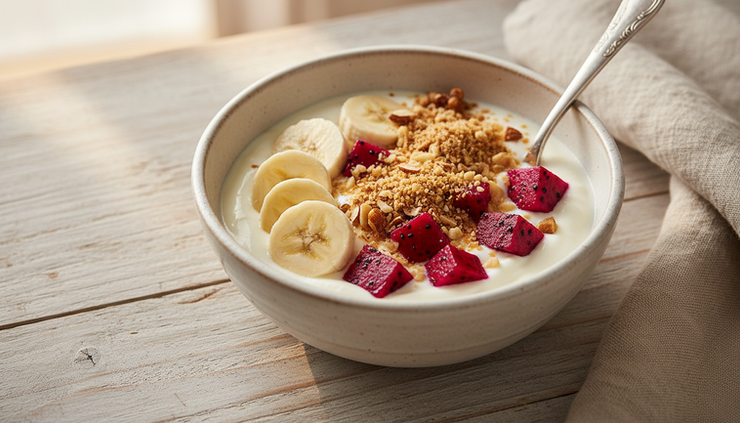
Easy snack recipes that are gentle and nutritious for seniors
These recipes use familiar ingredients and need little cooking. Adjust sweetness, texture, and portion size based on appetite and dietary needs.
Banana oat yoghurt bowl
This is soft, quick, and easy to customise.
Ingredients
3 to 4 tablespoons plain yoghurt
Half a ripe banana, sliced or mashed
1 tablespoon rolled oats
A pinch of cinnamon
1 teaspoon ground nuts or chia seeds, if suitable
Method
Mix everything in a small bowl. Let it sit for 5 to 10 minutes if a softer texture is preferred.
For extra energy, add a small spoon of peanut butter. For a lighter version, use more fruit and less oats.
Soft tofu with sesame and spring onion
This savoury snack is smooth and protein-rich.
Ingredients
Half a block of soft tofu
1 teaspoon sesame oil
A few drops of light soy sauce, if suitable
Chopped spring onion
Soft cucumber slices on the side
Method
Warm the tofu briefly or serve it chilled. Add sesame oil, soy sauce, and spring onion. Cut into small pieces for easy eating.
For a lower-salt version, use less soy sauce and add ginger or lime for flavour.
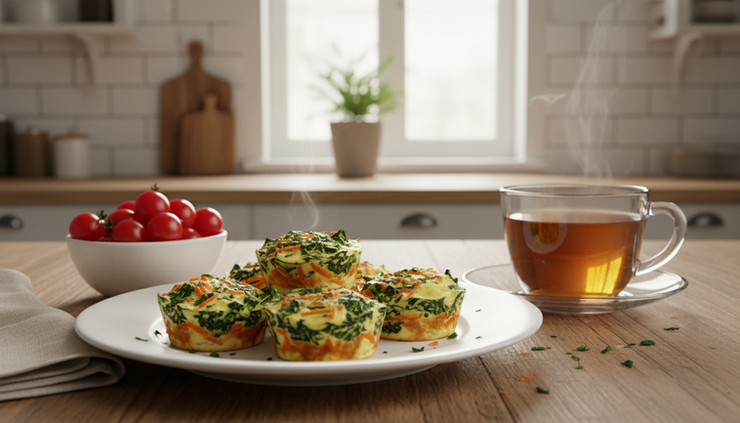
Mini egg and vegetable cup
This works well for meal preparation because it can be made ahead and kept in the fridge.
Ingredients
2 eggs
2 tablespoons milk
Finely chopped spinach, carrot, or mushrooms
A little grated cheese, optional
Method
Beat the eggs with milk. Stir in the vegetables. Pour into small muffin cups and bake until set. Serve one small cup as a snack.
Make the vegetables very finely chopped or cook them first if a softer bite is needed.
Sweet potato with yoghurt dip
Sweet potato is naturally soft and filling.
Ingredients
A small steamed sweet potato
2 tablespoons plain yoghurt
A squeeze of lemon or lime
A pinch of cumin or cinnamon
Method
Cut the sweet potato into pieces. Mix yoghurt with lemon or lime and spice. Serve on the side as a dip.
This snack gives fibre, carbohydrate, and a creamy protein boost.
Tuna cucumber bites
Choose this when a cool, savoury snack sounds better than something sweet.
Ingredients
Tuna in water, drained
1 teaspoon mayonnaise or plain yoghurt
Soft cucumber rounds or wholegrain crackers
Pepper or chopped herbs
Method
Mix tuna with mayonnaise or yoghurt. Spoon a little onto cucumber rounds or crackers.
If chewing is tiring, serve the tuna mixture on soft bread instead.
Papaya and cottage cheese bowl
Papaya is soft, juicy, and easy to enjoy.
Ingredients
A small bowl of ripe papaya cubes
2 to 3 tablespoons cottage cheese or plain yoghurt
A few crushed unsalted nuts, if suitable
Method
Place papaya in a bowl and top with cottage cheese or yoghurt. Add nuts for crunch only if chewing is safe and comfortable.
This is a simple way to combine fruit with protein.
Portion control without making snacks feel too small
Portion control for seniors is not about restriction. It is about matching food to appetite, health needs, and comfort.
Some seniors do better with five or six small eating moments rather than three large meals. A snack can be small and still useful if it includes protein, fibre, or healthy fat.
Try these practical portion cues:
Food | Gentle snack portion |
Yoghurt | 3 to 5 tablespoons |
Fruit | Half a banana, 1 small orange, or a small bowl of papaya |
Nuts | 1 small handful, chopped or ground if needed |
Crackers | 2 to 4 wholegrain crackers |
Egg | 1 egg or 1 mini egg cup |
Tofu | Half a small block |
Sweet potato | Half a small sweet potato |
Smaller plates and bowls can help. A large plate can make a modest serving look too little, which may discourage eating. A small bowl filled with yoghurt, fruit, and oats looks more inviting.
It also helps to serve snacks at predictable times. For example:
Mid-morning after medication and tea
Mid-afternoon when energy dips
Early evening if dinner portions tend to be small
Before bed if advised and if reflux is not an issue
Keep snacks visible and easy to reach. A covered bowl of washed fruit, pre-cut vegetables, small packs of crackers, or ready-to-eat yoghurt can reduce the effort needed to eat.
For loved ones who forget to snack, a gentle routine works better than pressure. Offer a small choice, such as “Would you prefer banana yoghurt or toast with egg?” Two options feel easier than an open-ended question.
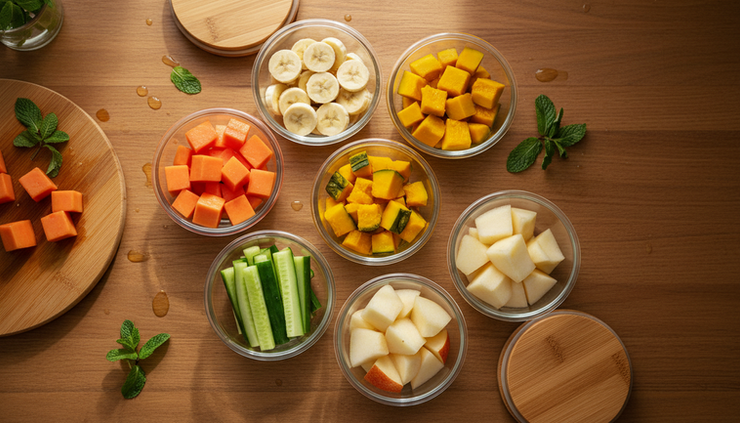
Easy ways to add more fruits and vegetables
Fruits and vegetables add fibre, fluid, vitamins, minerals, colour, and flavour. The challenge is making them easy enough to eat often.
Start with texture. Many seniors prefer softer produce, especially if they have dental discomfort or fatigue while chewing.
Good soft fruit options include:
Banana
Papaya
Mango
Ripe pear
Watermelon
Dragon fruit
Stewed apple
Canned fruit in juice, drained if needed
Easy vegetable options include:
Steamed pumpkin
Soft carrots
Spinach in egg or soup
Cucumber without thick skin
Tomato pieces
Mashed peas
Broccoli cooked until tender
Sweet corn kernels, if chewing is comfortable
A useful approach is to add produce to foods already enjoyed. This feels less like changing the whole diet.
Try these ideas:
Stir mashed banana into oats.
Add spinach to scrambled egg.
Serve cucumber slices with tofu.
Blend mango into plain yoghurt.
Add pumpkin to porridge or soup.
Top wholemeal toast with tomato and cheese.
Keep peeled orange segments ready in the fridge.
Smoothies can help when appetite is low, but they should not become only fruit juice. To make a smoothie more balanced, blend fruit with yoghurt, milk, soy milk, tofu, oats, or nut butter. This adds protein and helps it feel more like a snack than a sweet drink.
A simple smoothie formula:
Half a banana or a small handful of mango
150 ml milk, soy milk, or yoghurt
1 tablespoon oats
1 teaspoon peanut butter or ground nuts, if suitable
Blend until smooth. Serve in a small cup rather than a large glass so it feels manageable.
Supporting loved ones with small appetites
When caring for someone with a small appetite, the goal is not to push more food at every moment. It is to make eating calm, pleasant, and worthwhile.
Good nutrition does not only happen at a balanced meal; with simple meal preparation, home care and caregiving routines can include small snacks that support steady intake across the day.
A few gentle strategies can help:
Offer small portions first
A heaped bowl can feel discouraging. Start with two or three bites’ worth. Offer more later if wanted.
Choose nutrient-dense foods
Add value to small portions with egg, yoghurt, tofu, cheese, avocado, nut butter, fish, or beans.
Serve snacks when energy is highest
Some seniors eat better in the morning. Others prefer late afternoon. Notice the pattern and plan around it.
Make food easy to hold
Try small sandwiches, soft toast fingers, egg cups, banana slices, or bite-sized sweet potato.
Reduce distractions
A quiet table, good lighting, and enough time can make eating easier.
Respect preferences
Taste changes are real. If a once-loved food no longer appeals, try another flavour, temperature, or texture.
If appetite drops suddenly, weight changes quickly, chewing becomes painful, swallowing seems unsafe, or meals cause coughing, seek professional advice. Snacks can support daily intake, but they should not hide a medical issue that needs attention.
A simple snack plan for a calmer week
A little planning can make snacks easier without turning the kitchen into a project.
Pick three snack types for the week:
One soft protein snack
Yoghurt, tofu, egg cups, cottage cheese, or milk
One fruit or vegetable snack
Papaya, banana, steamed pumpkin, cucumber, or pear
One easy energy snack
Wholemeal toast, oats, sweet potato, crackers, or nut butter
Then prepare small amounts. Wash fruit, steam vegetables, boil eggs, portion yoghurt, or keep wholegrain crackers in an easy-to-open container. Label items if helpful.
A sample day could look like this:
Time | Snack idea |
Mid-morning | Banana oat yoghurt bowl |
Mid-afternoon | Soft tofu with sesame and cucumber |
Evening | Warm sweet potato with yoghurt dip |
The portions can stay small. What matters is consistency, comfort, and variety over time.
Healthy snacking for seniors should feel kind, not complicated. Focus on soft textures, familiar flavours, colourful produce, and protein in small servings. When snacks are easy to see, easy to chew, and easy to enjoy, they can become one of the simplest ways to support energy and overall health every day.



Comments