
Mealtime Seating Tips for Dysphagia - Safe Positioning Aids for Comfort and Swallowing Safety


A meal can feel calm one day and frightening the next when swallowing is difficult. A slight slump in the chair, a table that is too high, or feet swinging off the floor can make chewing and swallowing harder than they need to be.
For people with dysphagia, food texture and drink thickness often get the most attention. Those matter, of course. Yet seating and positioning can be just as important. A stable body gives the throat, tongue, jaw, and breathing muscles a better chance to work together.
This article is for informational use only and is not a substitute for advice from a speech therapist, doctor, dietitian, occupational therapist, or physiotherapist. Dysphagia can carry a risk of aspiration, choking, dehydration, and poor nutrition, so personalised guidance matters.

Why seating makes swallowing safer
Swallowing is a coordinated action. The body needs to hold itself steady while the mouth prepares food, the tongue moves it back, the airway protects itself, and the oesophagus carries food down.
When someone is poorly positioned, the whole process can become harder.
A person who slides down in a chair may have a tucked pelvis, rounded shoulders, and a head pushed forward. This can narrow the space around the throat. Someone leaning too far back may have to swallow against gravity. A person whose feet do not touch the floor may use extra effort just to stay balanced.
Better seating does not “cure” dysphagia, but it can reduce avoidable strain.
Good positioning can help with:
Better head and neck alignment
More stable breathing during meals
Improved chewing control
Less fatigue from trying to sit upright
Lower chance of food or fluid entering the airway
Greater comfort and dignity during mealtimes
A speech therapist I once worked with used a simple line that stayed with me.
“Before changing the spoon, look at the chair.”
That advice is practical. If someone coughs during meals, pockets food in the cheek, tires quickly, or keeps turning away from the plate, the issue may not be only the food. The seating setup deserves a careful look.
One caregiver shared that their father often coughed during dinner in his favourite armchair. It looked comfortable, but he sank into it and ate with his chin pointing slightly upward. After switching to a firmer chair, adding a footrest, and raising the table to elbow height, meals became less tense. His swallowing plan did not change that week, but his body finally had better support.
The best mealtime position starts with the whole body
A safe eating posture is not just “sit up straight”. It is about creating a stable base from the feet upward.
Think of the body as a stack. Feet support the legs. Legs support the pelvis. The pelvis supports the trunk. The trunk supports the shoulders, neck, and head. If the bottom of the stack is unstable, the top will struggle.
The phrase mealtime positioning aids for dysphagia covers many tools, but the principles stay the same.
Aim for an upright and balanced position
For most people with dysphagia, meals are safest when the body is upright, often close to a 90-degree seated angle. The person should sit with the hips back in the chair, trunk supported, and head in a neutral position.
A neutral head position usually means:
Eyes looking forward or slightly downward
Chin not lifted
Neck not twisted to one side
Shoulders relaxed
Jaw free to move
Avoid feeding someone while they are lying back unless a clinician has advised a specific position. Reclining can increase the risk of food or fluid moving towards the airway before the swallow is ready.
Some people are told to use a chin tuck, head turn, or other swallowing strategy. These should come from a speech therapist because the wrong technique can make swallowing less safe for some conditions.
Keep the feet supported
Feet matter more than many people realise.
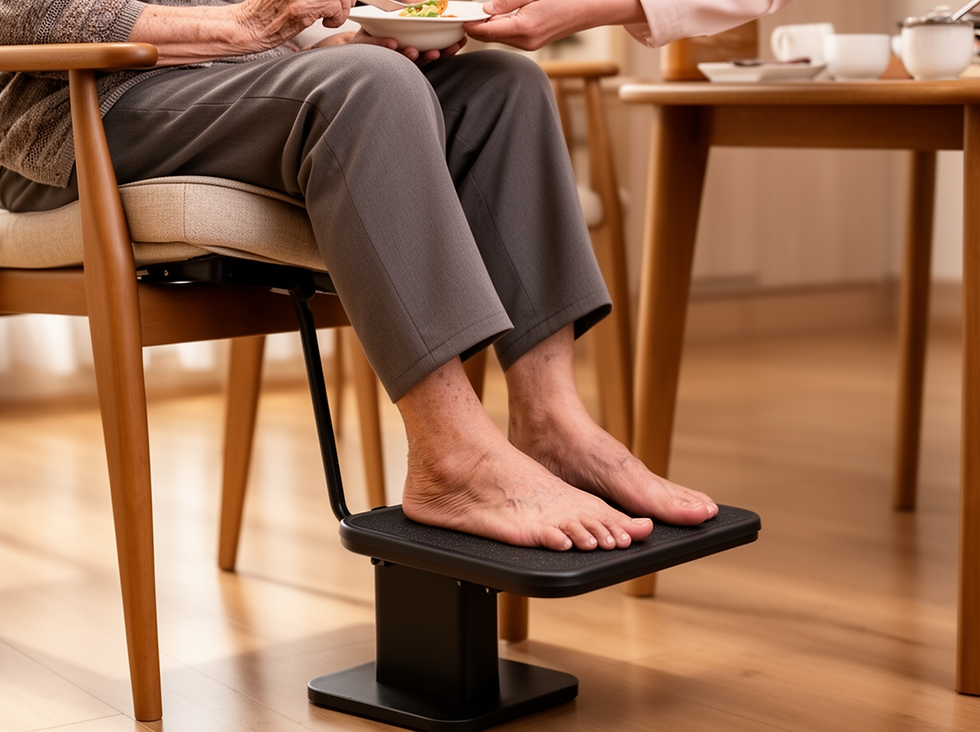
When feet dangle, the body often slides forward or leans to one side. This can disturb posture and make swallowing less controlled. A footrest, low stool, or wheelchair footplates can help the person feel grounded.
Good foot support means:
Both feet rest flat where possible
Knees are roughly at hip level
Legs are not crossed during meals
The person is not bracing or gripping the chair to stay upright
For smaller adults or people using standard dining chairs, even a firm box under the feet can make a sudden difference. The aim is not fancy equipment. The aim is stability.
Use the table to support posture
A table that is too high makes shoulders rise and arms tense. A table that is too low can cause the person to hunch forward. Either position can affect comfort, breathing, and attention.
A helpful table height allows the forearms to rest comfortably, with elbows near the body. The plate should be close enough that the person does not need to lean forward repeatedly.
If the person eats in a wheelchair or specialist chair, check whether the dining table allows the chair to fit underneath. If not, an adjustable table may be safer than asking the person to stretch or twist.
Positioning aids that can make mealtime calmer for people with dysphagia
The right aid depends on the person’s strength, balance, swallowing needs, skin condition, and home environment. Aids should support the body without forcing it into a stiff or uncomfortable shape.
Here are common options and how they help.
Aid | How it supports safer eating | What to check |
Specialised chair | Gives trunk, pelvis, and arm support during meals | Seat height, back angle, armrests, ease of transfers |
Firm cushion | Raises seat height or improves pelvic position | Avoid cushions that are too soft or slippery |
Lateral supports | Reduce leaning to one side | Should not press painfully into ribs or arms |
Footrest | Keeps feet grounded and improves stability | Height should allow relaxed knees and hips |
Adjustable table | Brings food and drinks to a safe working height | Table should not wobble or block transfers |
Non-slip mat | Helps keep plate or bowl in place | Clean often and check for wear |
Wheelchair tray | Supports arms and tableware | Must be fitted safely and not restrict breathing |
Specialised chairs
Some people manage well in a firm dining chair with arms. Others need a more supportive seating system.
A specialised chair may include:
A high back
Lateral trunk supports
Adjustable seat depth
Armrests
Tilt adjustment
Head support
Pressure-relieving cushions
For people who tire easily, lean strongly to one side, or cannot maintain upright sitting, a specialised chair can reduce the effort needed to stay in position. This leaves more energy for chewing and swallowing.
Tilt-in-space chairs can be useful for rest and pressure management, but mealtime angles need care. A person may rest in a tilted position, then move to a more upright position for eating if clinically appropriate. The exact setup should be guided by an occupational therapist, physiotherapist, or seating specialist.
Cushions
Cushions can be helpful, but they must be chosen with care.
A firm cushion may raise a person to a better table height. A wedge cushion may help some people keep the pelvis positioned well. Pressure cushions may be needed for people at risk of skin breakdown.
Avoid piling up random pillows. They can slide, collapse, or push the body into a poor position. A cushion that feels cosy at first may cause slumping after 10 minutes.
Good cushion use should:
Keep the pelvis stable
Maintain seat height
Reduce pressure without sinking too much
Stay secure on the chair
Allow safe transfers
If a person has fragile skin, reduced sensation, or spends long hours seated, get professional advice before changing cushions.
Adjustable tables
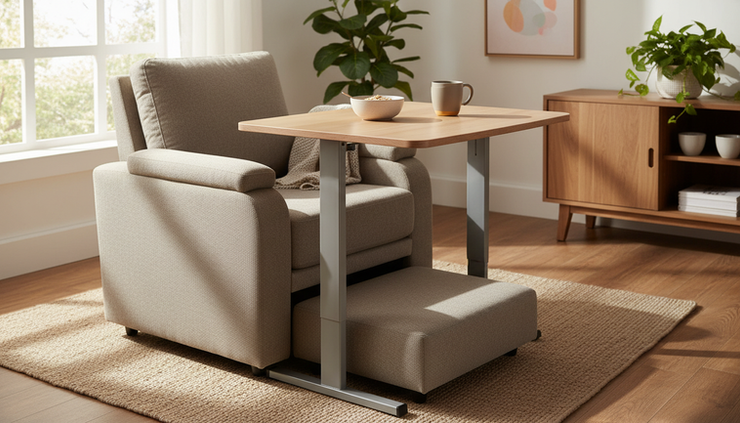
Adjustable tables are often overlooked. They can be very useful at home, in care settings, and during recovery after illness.
An adjustable table can help when:
A wheelchair does not fit under the dining table
The person eats in a recliner-style chair approved for meals
The caregiver needs to bring food closer without leaning over
The person needs arm support to reduce fatigue
The dining setup changes between meals
A stable overbed table can work well for some people, but it should not encourage eating while lying down. Raise the person first, check posture, then bring the table in.
Here is a simple way to remember the setup: bring the meal to the person, not the person to the meal. Reaching, twisting, and leaning can all affect swallowing safety.
A practical mealtime positioning checklist
Before serving food, take a minute to check the body position. This short pause can make the meal smoother for everyone.
Use this sequence.
Check the chair
The chair should be stable and not too deep. The person should be able to sit with hips back and back supported.
Check the pelvis
The person should not be sliding forward. If they are, the chair may be too deep, too soft, or poorly matched to their body.
Check the feet
Feet should be supported on the floor, footplates, or a footrest.
Check the trunk
The body should be upright and centred, not leaning heavily to one side.
Check the shoulders and arms
Shoulders should be relaxed. Arms can rest on the table or armrests if that helps.
Check the head
The head should be steady, with the chin level or slightly down, not tipped back.
Check the table
The plate and cup should be close enough to avoid reaching. The table should sit at a comfortable height.
Check alertness
Meals are usually safer when the person is awake, calm, and able to focus. If they are very drowsy, stop and seek advice.
A calm environment helps too. Turn off loud television, reduce rushing, and allow enough time between bites. Caregivers often feel pressure to finish the meal while food is warm. Safety matters more than speed.
A simple phrase can help during feeding: “Sit tall, take your time, swallow, then breathe.” Keep the tone gentle. Repeated correction can feel frustrating, especially for someone who already finds meals stressful.
For people who need assistance, sit at eye level rather than standing over them. Offer small amounts and watch for signs of difficulty, such as coughing, wet voice, watery eyes, throat clearing, breathlessness, or food remaining in the mouth. If these signs appear often, arrange a swallowing review.
The words safety, posture, support, chairs, cushions, footrest, home care, caregiving belong together at mealtimes because one small weakness in the setup can affect the whole meal.
When to ask for professional help
Positioning aids should support a care plan, not replace one. Dysphagia can change over time, especially after stroke, dementia progression, Parkinson’s disease, head and neck cancer treatment, surgery, or prolonged illness.
Ask for a professional review if the person:
Coughs or chokes often during meals
Has a wet or gurgly voice after swallowing
Gets frequent chest infections
Avoids eating or drinking
Loses weight without trying
Takes much longer to finish meals
Falls asleep during meals
Stores food in the mouth
Needs frequent prompting to swallow
A speech therapist can assess swallowing and suggest food textures, drink consistencies, pacing, and safe swallowing strategies. An occupational therapist can assess seating, equipment, transfers, and daily routines. A physiotherapist may help with trunk control, strength, and breathing posture. A dietitian can help keep meals nourishing when textures or portions change.
In Singapore, families often manage care in compact flats where dining space is limited. That does not mean the setup cannot be safe. A smaller table, a stable chair with arms, a simple footstool, and the right cushion may work better than bulky equipment that blocks movement.
The goal is not to make the home look clinical. The goal is to make meals safer, calmer, and more comfortable.

Small changes can make meals feel safer
Dysphagia care is rarely about one perfect product. It is usually a series of small, thoughtful adjustments.
A firmer chair. A better table height. Feet placed flat. The plate moved closer. A cushion that supports without sinking. A pause before the next bite. These changes may look minor, but they can reduce fatigue and help the body focus on swallowing.
If meals have become stressful, start with observation. Watch the person from the side during a typical meal. Are they upright? Are they reaching? Are their feet supported? Does the chair help them, or does their body fight against it?
Then change one thing at a time. Keep what helps. Seek professional guidance when swallowing signs persist or worsen.
A safer mealtime setup should feel steady, respectful, and comfortable. When the body is well supported, the meal has a better chance to become what it should be again: a moment of nourishment, connection, and calm.



Comments