
How to Safely Transfer and Reposition a Bedridden Person Without Causing Injury


Moving a person who is unable to get out of bed can feel simple until it is not. A small pull in the wrong direction can hurt the caregiver’s back, cause pain for the person being moved, or damage fragile skin. The safest transfers are slow, planned, and respectful.
This guide covers practical steps for moving and repositioning a bedridden person at home or in a care setting. It is written for everyday caregiving, but it is not a substitute for medical advice. If the person has recent surgery, fractures, severe pain, lines or tubes, wounds, or sudden weakness, ask a nurse, physiotherapist, or doctor for specific instructions before moving them.
Prepare the space, equipment, and your own body for safe transfer and repositioning
Good preparation prevents rushed movements. Before any safe transfer and repositioning task, pause and check the person, the bed, the floor, and your own posture.
Check whether it is safe to move
Before starting, ask a few quick questions.
Is the person alert enough to follow simple instructions?
Are they in pain before movement begins?
Do they feel dizzy, breathless, or unusually weak?
Are there wounds, pressure areas, tubes, catheters, or dressings that need protection?
Has a healthcare professional advised any movement limits?
If anything feels unsafe, stop and get help. A transfer that needs two people should not be attempted alone.

Set up the area
Create a calm space with enough room to move.
Lock the bed wheels if the bed has them.
Adjust the bed to about hip height if possible.
Remove clutter, loose rugs, and wet patches from the floor.
Keep equipment within reach before you begin.
Ensure good lighting, especially at night.
Close curtains or doors to protect privacy.
Place the chair, wheelchair, or commode close to the bed if a transfer out of bed is planned.
Lock wheelchair brakes and move footplates out of the way.
Use proper body mechanics
A caregiver’s back is most at risk when bending, twisting, or lifting with outstretched arms. Protecting yourself is part of protecting the person.
Use these principles every time:
Stand close to the person
The farther away the weight is, the harder your back works.
Keep your feet apart
A shoulder-width stance gives you a stable base.
Bend your knees and hips
Lower your body using your legs, not your waist.
Keep your back neutral
Avoid rounding your shoulders or arching your lower back.
Move your feet instead of twisting
Turn your whole body in the direction of the movement.
Push rather than pull when possible
Pushing often gives better control and reduces strain.
Use a count
Move on “one, two, three” so everyone moves together.
Never lift a person by pulling under their arms. This can injure their shoulders, cause pain, and tear fragile skin.
Use the right tools for safer movement
The right equipment can reduce friction, protect skin, and reduce the effort needed from the caregiver. For someone who is bedridden, low mobility, prevent skin shears and tears, pressure sores, home caregiving concerns often overlap, so equipment is not a luxury. It is part of safe care.
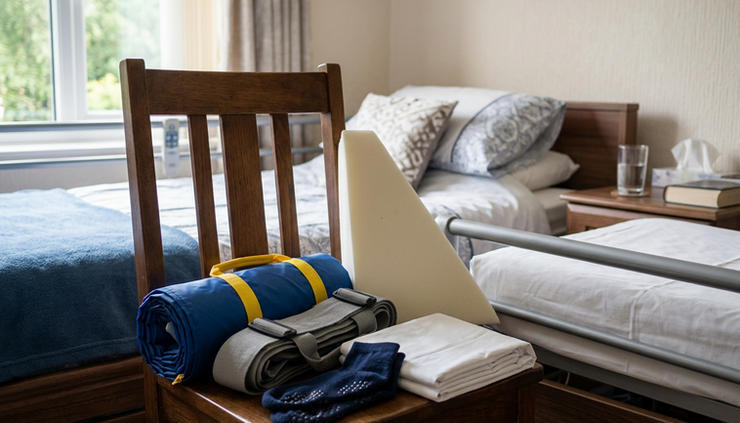
Essential transfer and repositioning equipment
Equipment | What it helps with | Safety note |
Slide sheet | Reduces friction when moving someone up, down, or across the bed | Remove or tuck away after use if it may increase slipping |
Draw sheet | Helps reposition a person without pulling on limbs | Use with two caregivers when possible |
Transfer belt | Gives a secure handhold for assisted standing transfers | Do not use over wounds, tubes, or painful areas |
Bed rails | Help with rolling and holding position | Use correctly to avoid trapping risks |
Pillows and wedges | Support side-lying positions and reduce pressure | Check that joints are aligned and comfortable |
Transfer board | Helps with seated transfers between bed and chair | Use only if the person has enough sitting balance |
Hoist or patient lift | Moves a person who cannot safely bear weight | Requires training and the correct sling size |
Wheelchair with brakes | Supports transfers out of bed | Lock brakes and move footrests before transfer |
When to use a hoist
A hoist may be needed if the person cannot stand, is very weak, cannot follow instructions, or if the caregiver cannot move them safely without lifting. A hoist should be used only by someone trained to operate it.
Before using a hoist, check:
The sling is the correct size and type.
The sling is not torn or frayed.
The person’s head, limbs, and skin are supported.
Brakes, straps, and clips are in the right position.
The destination chair or bed is ready before lifting begins.
Do not rush hoist transfers. Move slowly and keep speaking to the person throughout.
Reposition a bedridden person in bed step by step
Repositioning helps comfort, breathing, circulation, and skin protection. People with limited mobility may need regular changes in position, based on care advice and skin condition.
Move a person up the bed
This is common when someone has slid down towards the foot of the bed.
Explain the move
Tell the person, “We are going to move you up the bed. I will count to three.”
Flatten the bed if tolerated
A flatter surface reduces sliding resistance. Raise the head again as soon as the person is comfortable.
Ask the person to help if they can
They may bend their knees, push through their feet, or hold a bed rail.
Place a slide sheet or draw sheet
If using a slide sheet, position it under the hips and shoulders. If using a draw sheet, ensure it supports the body, not only the lower back.
Stand with good posture
Keep your feet apart, knees bent, and body close to the bed.
Move on a count
On “three”, shift your weight from your back foot to your front foot. Do not jerk.
Check alignment
Make sure the head, shoulders, hips, knees, and ankles are comfortable.
Raise the head of the bed if needed
Return the person to a safe, comfortable position.
If the person is heavy, very stiff, or unable to assist, use two caregivers or a hoist system where appropriate.
Turn a person onto their side
Side-lying can relieve pressure, support hygiene care, and help with bedding changes.
Prepare the person
Explain which side they will turn towards. Check for pain first.
Move them slightly away from the turning side
This gives space to roll safely without bringing them too close to the edge.
Position the arms and legs
Cross the far arm over the chest. Bend the far knee if safe and comfortable.
Use the sheet, not the person’s arm
Hold the draw sheet near the shoulder and hip. Keep your hands flat and secure.
Roll gently towards you
Shift your weight backwards while guiding the shoulder and hip together.
Support the position
Place pillows behind the back, between the knees, and under the top arm if needed.
Check skin and comfort
Look at bony areas such as the heels, hips, tailbone, shoulders, and elbows.
Avoid dragging skin across the sheet. Friction and shear can damage fragile skin even when the movement looks small.
Move a person side to side in bed
Sometimes the person must be moved across the bed before turning or care tasks.
Lower the bed head if tolerated.
Place a slide sheet or draw sheet under the shoulders and hips.
Stand on the side you are moving towards.
Keep your elbows close to your body.
On a count, shift your weight and slide the person across.
Stop before they get too close to the bed edge.
Raise bed rails only if they are part of the care plan and safe to use.
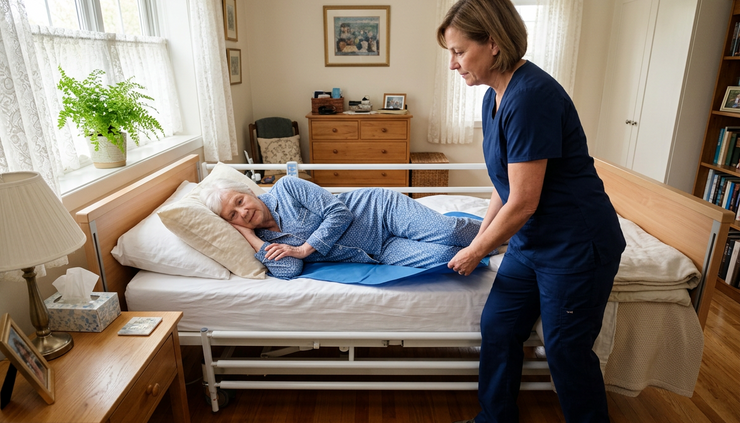
Transfer from bed to chair safely
A bed-to-chair transfer needs more planning than an in-bed turn. The person may feel dizzy when sitting up, especially after lying down for a long time.
Step one, prepare the chair
Place the chair or wheelchair on the person’s stronger side if they have one. Keep it close to the bed at a slight angle.
Before moving:
Lock the wheelchair brakes.
Remove or swing away footrests.
Make sure the seat is stable.
Place non-slip footwear on the person if they will stand.
Clear the path.
Check that clothing will not catch.
Step two, help the person sit at the edge of the bed
Raise the head of the bed if available.
Ask the person to bend their knees if they can.
Roll them onto their side facing the edge of the bed.
Support the shoulders and legs.
Help guide the legs over the edge as the upper body comes up.
Let the person sit for a moment.
Watch for dizziness, nausea, sweating, paleness, or breathlessness. If these occur, guide them back to lying and seek advice if symptoms do not settle.
Step three, set up your stance
Stand close, facing the person. Place one foot slightly in front of the other. Bend your knees. If using a transfer belt, hold the belt from the sides or back, not from the front.
Ask the person to:
Place both feet flat on the floor.
Scoot to the edge of the bed if safe.
Lean forward slightly.
Push from the bed or armrest, not from your neck or shoulders.
Step four, stand and pivot
Use a clear count.
Say, “On three, lean forward and stand.”
On three:
The person pushes through their legs and arms if able.
You guide from the belt or trunk area.
Keep your back neutral.
Pivot by moving your feet.
Guide the person until the back of their legs touches the chair.
Ask them to reach back for the armrest if they can.
Lower them slowly into the chair.
Do not pull the person into standing by their arms. If they cannot bear weight, use a hoist or seek help from another trained caregiver.
Step five, position for comfort
Once seated:
Place feet safely on footrests or the floor.
Check hips are back in the chair.
Support the back, arms, and head if needed.
Smooth clothing and bedding.
Check that tubes, catheters, and dressings are not pulling.
Ask whether they feel comfortable and secure.
Communicate clearly and protect dignity
Transfers feel safer when the person knows what is happening. Even if they cannot speak, they may still hear, feel, and understand more than expected.
Use short, clear instructions
Say what you will do before you touch or move them.
Helpful phrases include:
“I am going to help you turn onto your left side.”
“Please cross your arms over your chest.”
“We will move on the count of three.”
“Tell me if anything hurts.”
“Let’s pause for a moment.”
Avoid talking over the person as if they are not there. Include them in the process wherever possible.
Watch for non-verbal signs
Some people cannot describe pain or fear clearly. Look for:
Grimacing
Holding breath
Stiffening
Pulling away
Moaning
Sudden agitation
Pale or sweaty skin
Changes in breathing
If these signs appear, stop and reassess.
Keep the person covered and respected
Dignity matters during every movement, especially during bathing, toileting, or changing clothes.
Use these habits:
Close doors or curtains.
Keep the person covered with a sheet or towel where possible.
Explain each step before exposing any area.
Avoid unnecessary conversation with others during personal care.
Ask for preferences about position, pace, and comfort.
Use the person’s name and speak calmly.

Avoid common transfer mistakes
Many injuries happen because a caregiver tries to help quickly without enough support. Slow down when the task feels familiar. Familiar tasks are when shortcuts often appear.
Pulling on arms or shoulders
This can cause shoulder injury and pain. Use a draw sheet, transfer belt, slide sheet, or hoist instead.
Twisting while carrying weight
Twisting is hard on the lower back. Move your feet and turn your whole body.
Working with the bed too low
A low bed forces bending. Raise the bed to a comfortable working height if the bed allows it. Lower it again when the transfer is complete, especially if the person may try to get up.
Moving without counting
A count helps the person prepare and helps caregivers move together. Without it, one person may pull before the other is ready.
Forgetting the brakes
Always lock wheelchair and bed brakes before transfer. A chair that shifts even slightly can cause a fall.
Dragging skin across the bed
Dragging can cause skin damage, especially over bony areas. Use slide sheets and lift or roll gently where possible.
Ignoring pain or fatigue
Pain is a signal. Stop, support the person, and reassess. If pain is new, severe, or linked with swelling, injury, or breathlessness, seek medical advice.
Trying to do a two-person task alone
If the person cannot assist, cannot bear weight, or feels unsafe, get help. No transfer is worth a caregiver injury or a fall.

Safe caregiving is not about strength. It is about planning, posture, equipment, and clear communication. Before every move, check the person’s condition, prepare the space, protect your back, and explain what will happen.
A good transfer ends with both people safe. The person being moved should feel supported, covered, and comfortable. The caregiver should finish without back strain, panic, or guessing. When a move feels beyond your ability, pause and ask for trained help. That decision is part of good care.



Comments